Unicorns Patterns for Creative Expression: Elevating Kids Party Decor and Beyond
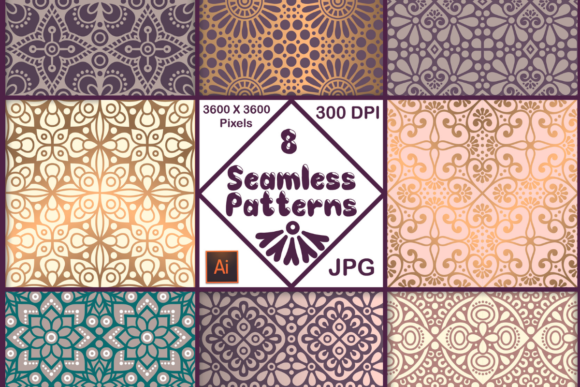
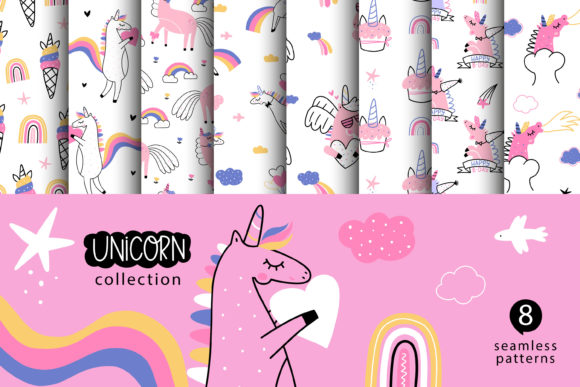
Unicorns Patterns have evolved far beyond childhood whimsy—they now serve as versatile, professional-grade design assets with tangible utility across industries. At their core, these patterns blend mythic symbolism with functional aesthetics, offering creators a bridge between imagination and execution. When paired thoughtfully with Kids Party Decor, they become more than festive accents; they form the visual backbone of immersive experiences—whether for a birthday celebration, classroom theme, retail display, or digital product launch. This article explores how a curated set of 8 vector patterns (EPS) and 8 seamless patterns (JPG at 300 DPI) functions not just as decoration, but as a flexible creative toolkit grounded in real-world application.
Why Seamless Matters: The Technical Foundation of Scalable Design
Seamless patterns are not merely repeating graphics—they’re engineered compositions that eliminate visible edges or breaks when tiled. This technical precision is what makes them indispensable for large-format printing, fabric production, web backgrounds, and packaging mockups. Unlike raster images with fixed dimensions, the EPS vector files in this set retain infinite scalability without pixelation. That means a unicorn motif can stretch across a 10-foot banner or shrink to fit a cupcake wrapper—all while preserving crisp lines, consistent color fidelity, and clean anchor points.
The inclusion of both EPS and high-resolution JPG formats addresses distinct workflow needs. Designers using Adobe Illustrator or Affinity Designer rely on vectors for editing flexibility—adjusting colors, isolating elements, or modifying stroke weights. Meanwhile, the 300 DPI JPGs serve print-ready purposes: direct upload to print-on-demand platforms, integration into Canva templates, or use in Photoshop composites where layer blending or texture overlays are required. This dual-format approach reflects an understanding of how professionals actually work—not how software manuals suggest they should.
From Celebration to Curriculum: Diverse Applications of Unicorn-Themed Visual Language
While Kids Party Decor remains the most intuitive context, the expressive range of Unicorns Patterns extends into unexpected domains:
- Educational Materials: Teachers use seamless unicorn motifs to create visually cohesive worksheets, behavior charts, and classroom borders. A soft pastel pattern with subtle stars and rainbows can reduce visual overload while maintaining engagement—especially beneficial for neurodiverse learners who respond well to predictable, non-distracting repetition.
- Small Business Branding: Boutique bakeries, children’s book illustrators, and indie toy makers integrate these patterns into labels, business cards, and social media banners. Because each pattern avoids over-saturation (no “busy” chaos), they support brand recognition without competing with logos or typography.
- Digital Product Development: App developers designing early-learning games or interactive storybooks apply these patterns as UI backgrounds or reward screen textures. The consistent scale and alignment ensure smooth rendering across device sizes—from tablets used in preschool settings to desktop dashboards for parent portals.
- Textile and Merchandise Design: Fabric printers and crafters repurpose vector elements to develop custom iron-on transfers, tote bags, or nursery wall decals. Since the EPS files contain editable paths, designers can extract individual unicorns, clouds, or rainbows to build new compositions—extending the set’s lifespan beyond its original layout.
What unites these applications is intentionality. These aren’t generic clipart collections. Each of the eight patterns demonstrates deliberate variation in density, rhythm, and focal emphasis—for example, one may feature widely spaced unicorns against a starfield (ideal for subtle backdrops), while another layers interlocking rainbows and crescent moons (better suited for bold signage). That diversity allows users to match pattern behavior to functional goals—not just aesthetic preference.
Design Integrity Over Trend Chasing: What Sets These Patterns Apart
In a market saturated with “cute” digital assets, authenticity emerges through restraint and craftsmanship. These Unicorns Patterns avoid common pitfalls: excessive glitter effects that don’t translate to print, inconsistent line weights that break at small scales, or overly literal interpretations that limit adaptability. Instead, they employ thoughtful simplification—clean silhouettes, balanced negative space, and harmonized palettes rooted in accessible color theory.
Consider the role of contrast. A pattern designed for vinyl cutting requires sharp delineation between figure and ground; one intended for embroidery digitizing benefits from grouped shapes that minimize stitch jumps. Though not explicitly labeled for those uses, the underlying structure supports both. That versatility stems from foundational decisions made during creation—not retrofitted enhancements.
Also notable is the absence of licensed character derivatives. These are original, stylized unicorns—not imitations of popular media franchises. That distinction matters legally and ethically: educators avoid copyright concerns when projecting patterns during lessons; small businesses sidestep takedown risks when selling physical goods; and designers retain full usage rights without attribution clauses. It’s a quiet but critical advantage often overlooked in asset evaluation.
Workflow Integration: How Professionals Actually Use These Files
Real-world adoption hinges less on theoretical potential and more on frictionless integration. Here’s how different users leverage the set within existing systems:
- Event Planners: Import JPGs directly into PowerPoint or Google Slides to build printable invitations, photo booth backdrops, and menu cards. The 300 DPI resolution ensures crisp output even when enlarged to tabloid size.
- Graphic Designers: Place EPS files into Illustrator artboards, then use Global Colors to shift entire palettes with one adjustment—essential when aligning decor with a client’s brand guidelines or seasonal palette shifts (e.g., pastels for spring, jewel tones for winter).
- Teachers and Homeschoolers: Drag JPGs into Google Docs or Microsoft Word as page backgrounds, then overlay text boxes with learning objectives or activity instructions. The seamless nature prevents awkward mid-sentence repeats.
- Print-on-Demand Sellers: Upload JPGs to platforms like Printful or Redbubble as all-over-print templates. Because the files tile predictably, garments and home goods render uniformly—no manual seam adjustments needed.
This cross-platform compatibility isn’t accidental. It reflects awareness of how tools intersect in practice: educators rarely own Adobe Creative Cloud, yet still need professional results; small studios juggle multiple clients with varying technical constraints; and hobbyists seek quality without complexity. Supporting that spectrum requires more than file variety—it demands intelligent defaults.
Accessibility and Inclusivity Considerations
Effective design acknowledges human variability. While unicorns evoke joy and fantasy, their presentation must remain inclusive. These patterns avoid reliance on color alone to convey meaning—shapes are distinct even in grayscale previews. Line thicknesses exceed WCAG minimum thresholds for visibility, supporting users with low vision. And because the vector files allow easy recoloring, designers can adapt palettes for dyslexia-friendly contrast ratios or cultural appropriateness (e.g., swapping purple for indigo in regions where purple carries specific ceremonial connotations).
Further, the patterns steer clear of stereotyped gender coding. Unicorns appear in varied poses—grazing, leaping, resting—with neutral or nature-based accents (crystals, ferns, dewdrops) rather than exclusively “girly” signifiers like bows or hearts. This broadens relevance across age groups and identities, making them equally suitable for a kindergarten literacy night or a teen-led STEAM camp themed around mythical biology.
Long-Term Value Beyond the First Project
Purchasing design assets shouldn’t feel like disposable consumption. These Unicorns Patterns deliver enduring value through compositional longevity. Unlike trend-dependent graphics that date quickly, their clean forms and balanced proportions align with timeless design principles—repetition, symmetry, hierarchy, and scale. A pattern used for a 2024 birthday party remains effective for a 2027 library summer reading program or a 2030 wellness workshop for young caregivers.
Moreover, the set invites iteration. Designers report using individual elements as building blocks—extracting a single horn motif to create custom watermarks, or combining cloud and rainbow fragments to develop unique border treatments. That modularity transforms a static collection into a generative resource, supporting creative growth rather than prescribing fixed outcomes.
Thanks for stopping by, Tatyana. Your attention to detail—across format fidelity, functional range, and respectful representation—makes this set resonate across roles, tools, and intentions. Whether you’re sketching a lesson plan at midnight or finalizing a client presentation before sunrise, these patterns meet you where you are: practical, precise, and quietly magical.