Watercolor Kids Seamless Patterns
Imagine printing a soft, joyful watercolor pattern of tiny houses onto organic cotton baby rompers — the kind that feels gentle against newborn skin and photographs beautifully in milestone sessions. Or designing custom scrapbook paper for a kindergarten teacher’s end-of-year memory book, where every page whispers warmth and playfulness. That’s the quiet power of Watercolor Kids Seamless Patterns: not just decoration, but a practical creative tool built for real-life making.
What You’re Actually Getting (No Surprises)
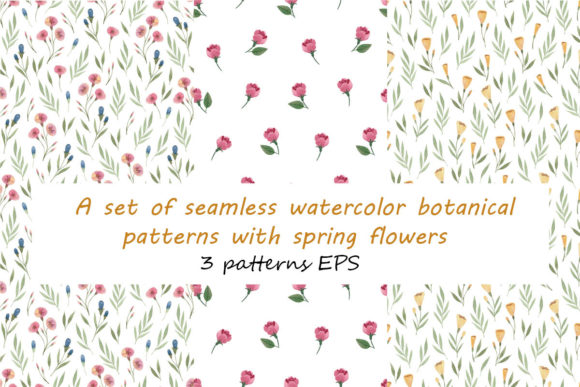
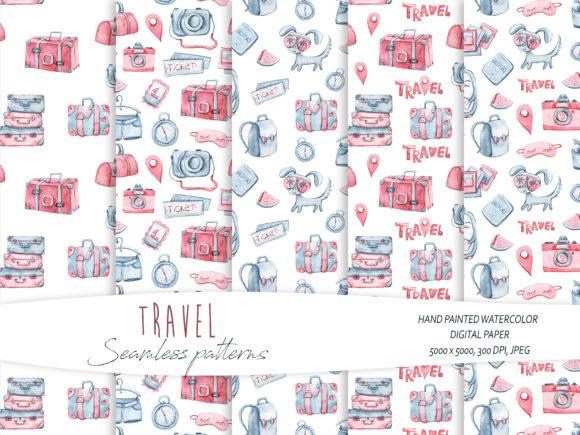
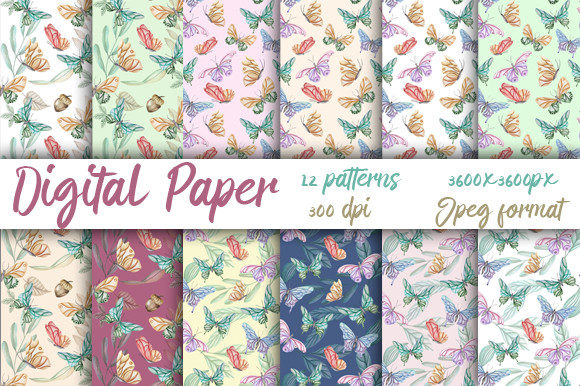
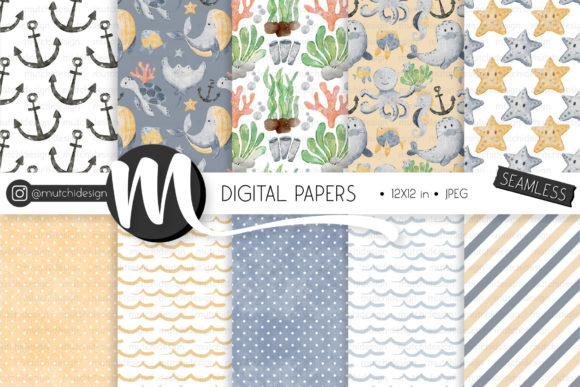
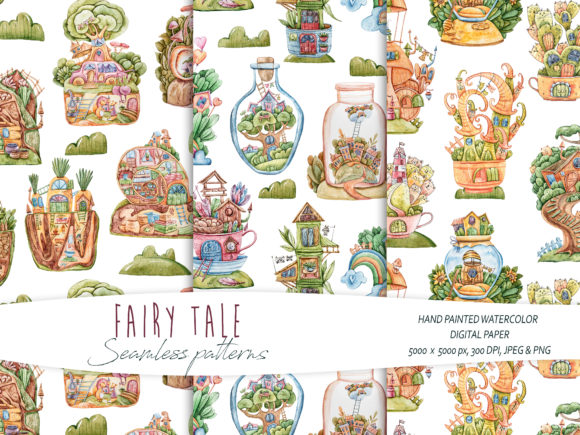
This isn’t a single clipart file or a low-res JPEG you’ll stretch and pixelate. You receive three high-resolution seamless patterns — each delivered as both PNG and JPEG, sized at 5000 × 5000 pixels. That resolution means crisp detail whether you’re printing a 24″ × 36″ wall mural or scaling down to a 2″ × 2″ fabric swatch for a boutique tote bag. The “seamless” part? No visible repeats, no awkward joins — just smooth, natural flow across any surface, large or small.
The Watercolor cute houses seamless pattern is one standout: hand-painted cottages with sloped roofs, potted plants, and subtle washes of sky blue and buttery yellow. It reads as cheerful but never cloying — perfect for spaces and products where charm matters, but sophistication still counts.
Where These Patterns Show Up in Real Life
You don’t need a design degree to use these. You just need a project that calls for warmth, personality, and consistency — without the hours of building from scratch.
- Fabric & Textile Design: A small-batch children’s clothing brand uses the houses pattern on breathable linen-blend pillowcases and matching crib sheets. Parents love the tactile softness *and* the Instagram-friendly aesthetic — it’s become their best-selling nursery set.
- Scrapbooking & Paper Goods: A homeschool mom prints the pattern onto cardstock, then cuts it into custom journal covers for her kids’ science notebooks. No more generic black spirals — now every project starts with visual continuity and quiet pride.
- Home & Lifestyle Products: An Etsy ceramicist applies the pattern digitally to mug templates, then sublimates it onto white ceramic mugs. They sell them alongside matching dish towels printed on cotton-linen blend — all coordinated, all cohesive, all made possible by one seamless file.
- Digital + Print Hybrid Projects: A freelance educator creates printable classroom resources — behavior charts, reading logs, reward certificates. She layers the watercolor pattern as a subtle background behind clean typography. It adds visual calm without distracting from function.
Why Seamless Matters More Than You Think
Ever tried tiling a non-seamless image across fabric? You get repeating edges — a hard line where the pattern resets. That breaks immersion. On wallpaper, it looks like a mistake. On a tote bag seam, it draws attention to stitching instead of the design. Seamless patterns eliminate that friction. They let your idea breathe across surfaces the way real watercolor does: fluid, organic, unhurried.
That 5000 × 5000 px size isn’t overkill — it’s flexibility. Resize it for a phone case mockup (3000 px wide) or zoom in for embroidery digitizing (where fine texture detail matters). You’re not locked into one output; you’re equipped for many.
Who Uses This — and Why It Fits Their Reality
A blogger documenting toddler life might use the houses pattern as a consistent visual thread across Pinterest pins, blog headers, and printable weekly planners. It builds brand recognition without needing a logo — just mood, color, and repetition done right.
A textile designer launching a capsule collection uses the files to pitch to print-on-demand partners. High-res, CMYK-ready, repeat-perfect — no back-and-forth about bleed or alignment. That saves days when deadlines loom.
A small business owner selling handmade baby blankets prints the pattern onto cotton voile, then layers it under quilted muslin. The watercolor softness translates beautifully to fabric — no harsh vector lines, no plastic-looking saturation. Just gentle, handmade energy.
Things to Keep in Mind Before You Start
These patterns work best when matched to your material’s behavior. For example: watercolor textures shine on matte paper or natural fiber fabrics — but may look muddy on glossy photo paper or polyester blends with heavy sheen. Test a small swatch first.
If you’re printing for commercial resale (like mugs or apparel), check your platform’s requirements. Some POD services prefer RGB PNGs with transparent backgrounds; others need flattened JPEGs. All three files here give you that choice — no re-exporting needed.
And while the patterns are playful, they’re not childish in a limiting way. That houses motif reads as nostalgic, cozy, even slightly Scandinavian — so it fits equally well in a Montessori classroom, a minimalist nursery, or a boutique stationery shop.
Real Output, Not Just Pretty Pixels
One freelance illustrator used the Watercolor Kids Seamless Patterns to create a limited-run series of fabric-wrapped sketchbooks. She sold out in 72 hours — not because of aggressive marketing, but because customers recognized the quality instantly: the pattern scaled cleanly across curved spines, held detail in stitching lines, and felt *intentional*, not stock.
Another user — a curriculum developer — embedded the pattern into editable Canva templates for early literacy worksheets. Teachers downloaded them, added their own text, and printed on standard copy paper. The watercolor background reduced visual fatigue for young readers, while keeping the page feeling inviting rather than clinical.
That’s the outcome these patterns deliver: reliability with character. You’re not buying decoration. You’re buying time saved, confidence earned, and consistency achieved — without sacrificing warmth or authenticity.
Ready When You Are
Whether you're prepping for a craft fair, launching a product line, personalizing a gift, or simply wanting your home office supplies to feel like *yours*, these patterns meet you where you are. No complex software required. No design theory crash course. Just open, scale, print — and let the watercolor softness do the rest.