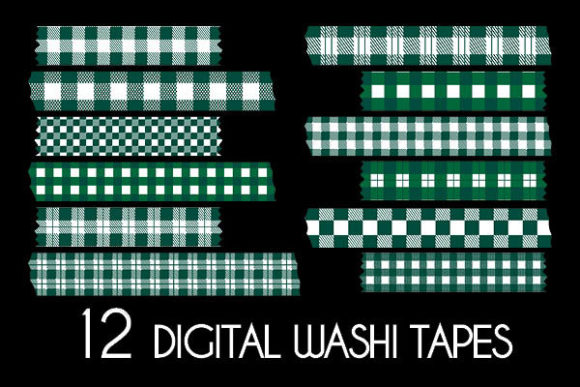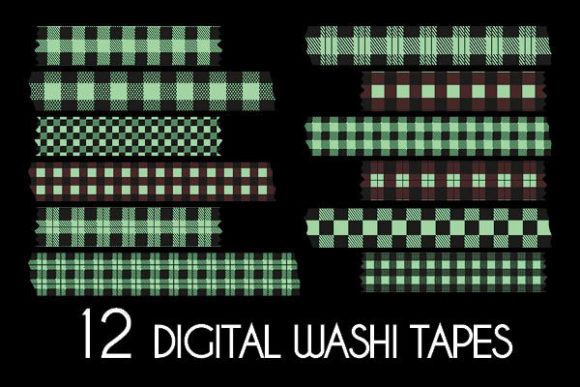
Light Green Plaid Washi Tapes Patterns
There’s a quiet power in subtle design—especially when it supports intention. Light Green Plaid Washi Tapes Patterns bring that balance: understated elegance with clear utility. Unlike bold, saturated tapes that dominate a layout, light green plaid offers soft contrast, gentle rhythm, and visual breathing room. It reads as calm but intentional—ideal for creators who value cohesion over clutter and meaning over flash.
Why This Specific Pattern Matters (Beyond Aesthetics)
Plaid isn’t just decorative here—it’s functional structure. The intersecting lines create natural alignment guides, helping you position elements with quiet precision. When labeling mason jars in a kitchen pantry, that grid subtly cues consistent spacing. On recipe cards, the pattern reinforces readability without competing with handwritten notes or printed text. And because the base tone is light green—not neon, not sage, not olive—it harmonizes with both warm neutrals (cream, oat, terracotta) and cool tones (slate, pale blue, dove gray). That versatility means less time matching and more time making.
Twelve Tapes, One Thoughtful System
You’ll receive 12 Light Green Plaid Washi Tapes—each with consistent scale, color fidelity, and adhesive performance. That uniformity matters. When you’re batch-prepping 30 greeting cards for a small business launch, knowing every strip will tear cleanly, stick reliably, and look cohesive saves mental energy. No surprises. No mismatched batches. Just dependable repetition—so your focus stays on message, not medium.
Real Projects, Real Time Saved
Consider educators prepping classroom materials: laminated charts, student feedback tags, or interactive bulletin board labels. Light Green Plaid Washi Tapes Patterns add tactile clarity without visual noise—students see organization, not distraction. Or picture a freelance food photographer styling flat lays. A single strip wrapped around a vintage spoon handle or securing a folded napkin adds texture and continuity across shots—no retakes needed to fix tape glare or curl.
Small business owners using jar labels for handmade soaps or spice blends find this pattern especially useful. It reads as artisanal but polished—neither too rustic nor overly corporate. Because the green is light, it doesn’t mute product colors underneath (unlike deep forest or kelly green), and because the plaid is fine-scale, it won’t overwhelm petite containers like 2-oz amber glass bottles.
Crafting With Intention—Not Just Decoration
Scrapbookers often reach for washi tape to frame photos or separate journaling blocks. With Light Green Plaid Washi Tapes Patterns, that framing does double duty: it defines space *and* introduces gentle visual rhythm. Try layering two strips at slightly offset angles behind a polaroid corner—it creates depth without bulk. For candy wrappers or gift tags, the pattern adds craft-level detail that signals care, even when time is tight.
And for digital creators printing physical assets—bloggers designing printable planners, podcasters mailing subscriber kits—the consistency of 12 identical tapes means every printed insert feels part of the same system. No “this one looks different” moments during assembly.
Who Benefits Most—and Why
This set serves people whose work bridges creativity and communication: educators building inclusive classroom environments, solopreneurs packaging products with authenticity, content creators translating online voice into tangible touchpoints, and hobbyists who treat process as practice—not just output.
It’s especially valuable if you regularly switch contexts: designing a workshop handout in the morning, labeling pantry staples by noon, and assembling a memory book in the evening. Light Green Plaid Washi Tapes Patterns adapt without demanding relearning or recalibration. There’s no steep learning curve—just immediate usability.
A Note on Fit and Realistic Expectations
These tapes perform best on smooth, dry, non-porous surfaces—cardstock, coated paper, glass, ceramic, and sealed wood. They’re not designed for long-term outdoor use or high-moisture environments like refrigerator doors (condensation can weaken adhesion over days). If your projects involve frequent handling—say, reusable recipe cards flipped daily—consider reinforcing high-touch corners with a second narrow strip. That small step extends wear without compromising the clean look.
Also worth noting: while 12 tapes provide excellent variety within unity, they’re not a full-color system. If your workflow relies heavily on color-coding (e.g., red = urgent, blue = reference), you’ll want to pair these with complementary solid-tone tapes. But as a foundational neutral—anchoring, calming, and quietly structured—they fill a distinct role many collections overlook.
Thoughtful Pairings, Not Just Add-Ons
Light Green Plaid Washi Tapes Patterns work well alongside kraft paper, linen-textured cardstock, and muted metallic accents (think antique gold foil, not chrome). Avoid pairing with busy botanical prints or high-contrast geometrics unless intentional contrast is the goal—otherwise, the plaid can recede or compete.
For educators using these on student work samples, try combining them with soft graphite pencil annotations instead of bright marker highlights. The result feels grounded, respectful of the learner’s effort, and visually cohesive.
Efficiency That Feels Human
We often equate efficiency with speed—but true efficiency includes reducing decision fatigue. When you open a drawer and see 12 identical Light Green Plaid Washi Tapes Patterns, there’s no scanning, no sorting, no questioning which one “goes with” today’s project. That micro-savings compounds: five seconds here, ten seconds there, adding up to preserved attention for what actually matters—your idea, your student, your customer, your story.
That’s the quiet strength of consistency done well. Not rigid uniformity, but reliable resonance—where tool and intention align so naturally, you forget you’re using a tool at all.
One Last Practical Tip
Store your 12 Light Green Plaid Washi Tapes upright in a repurposed pencil cup or shallow drawer organizer—not wound tightly on a spindle. This prevents edge curl and keeps the adhesive ready for clean, straight tears. A quick wipe of the dispenser edge with a lint-free cloth once a week maintains smooth unrolling, especially in drier climates.