Buffalo Plaid Seamless Patterns: A Creative Designer’s Essential Resource
Buffalo plaid—bold, timeless, and instantly recognizable—is more than just a winter fashion staple. Originating from 19th-century wool blankets designed for durability and warmth, this iconic red-and-black (or navy-and-black, charcoal-and-cream) checkered pattern has evolved into a versatile visual language used across design disciplines. Today, buffalo plaid seamless patterns are in high demand—not as static images, but as flexible, scalable digital assets that empower designers, crafters, small businesses, and educators to bring cohesion, authenticity, and seasonal charm to their work.
What Exactly Is a Buffalo Plaid Seamless Pattern?
A seamless pattern is a tileable graphic element that repeats infinitely without visible edges or breaks. When applied to buffalo plaid, this means the classic oversized checkerboard layout flows continuously across any surface—whether it’s a wedding invitation, a fabric bolt, a café menu board, or a social media post background. Unlike a single JPEG of a plaid swatch, a buffalo plaid seamless pattern is engineered so that its top edge aligns perfectly with its bottom edge, and its left edge matches its right—enabling flawless repetition at any scale.
This technical precision is what makes seamless patterns indispensable in professional design workflows. Without seamlessness, repeating a pattern often results in distracting gaps, misaligned lines, or jarring transitions—especially noticeable in print or large-format applications like wall decals or textile printing.
Why “Seamless” Matters More Than You Think
Imagine designing custom gift wrap for a holiday boutique. If you use a non-seamless plaid image and attempt to tile it, the repeat may reveal awkward white slivers or duplicated lines where tiles meet. That tiny flaw undermines professionalism—and customer trust. In contrast, a true buffalo plaid seamless pattern ensures crisp, consistent coverage every time. It’s not just about aesthetics; it’s about reliability, scalability, and efficiency.
Real-World Uses for Buffalo Plaid Backgrounds
The enduring appeal of buffalo plaid lies in its adaptability. Far beyond flannel shirts and rustic cabin decor, buffalo plaid backgrounds serve functional and expressive roles across industries:
- Invitations & Stationery: Wedding suites, baby announcements, and holiday cards gain warmth and tradition with subtle or bold plaid overlays—ideal for autumn or winter themes.
- Packaging Design: Small-batch soap makers, candle brands, and artisanal food producers use buffalo plaid to signal handcrafted quality and cozy authenticity.
- Planner & Journal Inserts: Teachers, students, and bullet journal enthusiasts integrate plaid patterns into printable weekly layouts or cover designs for visual rhythm and seasonal engagement.
- Scrapbooking & DIY Crafts: Physical and digital scrapbookers rely on seamless plaid files to create layered, textured pages without pixelation or tiling errors.
- Fabric & Home Goods: From upholstery mockups to pillow prototypes, designers use vector-based plaid patterns to preview how motifs will behave across yardage before cutting a single thread.
- Signage & Retail Displays: Cafés, bookshops, and pop-up markets apply buffalo plaid to banners, chalkboard headers, and shelf liners to evoke comfort, nostalgia, and approachability.
Understanding File Types: Why This Collection Includes EPS, SVG, JPEG, and PNG
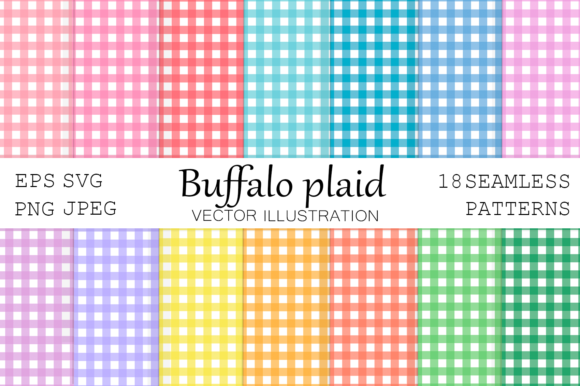
A truly versatile collection doesn’t just offer one format—it delivers the right tool for each job. Here’s why this set includes 18 vector EPS files, 18 SVG files, 18 JPEG files, and 18 PNG files:
- EPS (Encapsulated PostScript): Industry-standard vector format compatible with Adobe Illustrator, CorelDRAW, and most professional print workflows. EPS files scale infinitely without quality loss—essential for large signage or embroidery digitizing.
- SVG (Scalable Vector Graphics): Web-optimized vector format perfect for digital use—think animated websites, interactive PDFs, or Cricut/Silhouette cutting machines. SVG supports transparency and responsive resizing.
- JPEG: High-resolution raster format ideal for quick previews, email attachments, or platforms that don’t support vector uploads (e.g., some e-commerce product editors). Best for screen display where transparency isn’t needed.
- PNG: Raster format with alpha transparency—critical when layering plaid over photos, gradients, or colored backgrounds in Photoshop or Canva. No white boxes, no guesswork.
Having all four formats in one collection eliminates workflow bottlenecks. Whether you’re prepping files for a local print shop (EPS), uploading to an online fabric printer (SVG + PNG), or building a Shopify banner (JPEG + PNG), you’re covered—no conversion tools, no quality compromises.
Compatibility You Can Trust
These files are built for real-world use—not theoretical compatibility. They work natively with all versions of Adobe Photoshop and Illustrator, as well as popular alternatives like Affinity Designer, GIMP, Inkscape, Cricut Design Space, Silhouette Studio, and even Microsoft PowerPoint and Google Slides (via PNG/JPEG insertion). No plugins. No hidden fees. Just drag, drop, and design.
Debunking Common Misconceptions
Before wrapping up, let’s clarify a few assumptions people often make about buffalo plaid patterns:
- Misconception: “All buffalo plaid looks the same.”
Reality: True buffalo plaid follows a specific two-color, alternating double-thread structure (e.g., two red threads, two black threads). But modern interpretations vary widely—some emphasize contrast, others soften tones; some stretch the scale for drama, others shrink it for subtlety. This collection celebrates that diversity. - Misconception: “Seamless = low effort.”
Reality: Creating a mathematically precise, visually balanced seamless pattern requires expertise in alignment, color harmony, and repeat logic. These aren’t auto-tiled screenshots—they’re hand-crafted, tested, and optimized. - Misconception: “Only crafters need these.”
Reality: Educators use them for printable classroom borders; marketers deploy them in branded email templates; UX designers apply them as subtle UI textures. Creativity isn’t confined to one role—it’s a shared language.
Getting Started With Your Buffalo Plaid Collection
You don’t need advanced software or years of experience to benefit from this set. Start simple:
- Open a PNG file in Canva and set it as a background for a social media post.
- Import an SVG into Cricut Design Space and cut plaid vinyl for a custom laptop sleeve.
- Place an EPS file into Illustrator, then use the “Pattern Options” panel to adjust scale, spacing, or color—no redrawing required.
- Drag a JPEG into PowerPoint to create a cohesive slide deck for a seasonal business pitch.
Each of the 18 unique patterns offers distinct rhythm, density, and tone—so whether you’re aiming for vintage authenticity, modern minimalism, or playful contrast, there’s a match waiting.
Final Thoughts: More Than Just a Pattern—It’s a Creative Catalyst
In a world saturated with generic stock graphics, buffalo plaid seamless patterns stand out because they carry meaning. They whisper stories of heritage, craftsmanship, and grounded simplicity. But more importantly, they’re practical: reliable, adaptable, and ready to elevate your next project—whether you're launching a brand, teaching a class, planning a wedding, or simply making your home feel more like *you*.
Thank you for visiting our store—and for choosing tools that honor both creativity and clarity.