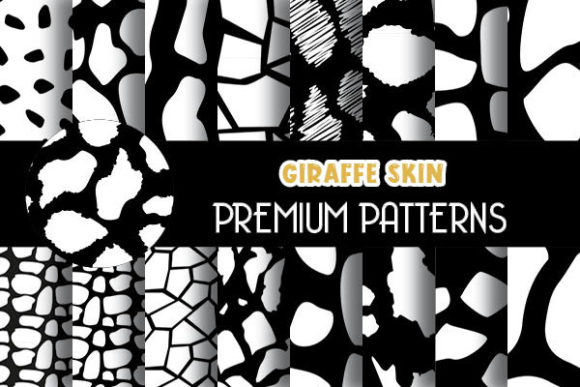
Black Giraffe Skin Animal Print Patterns
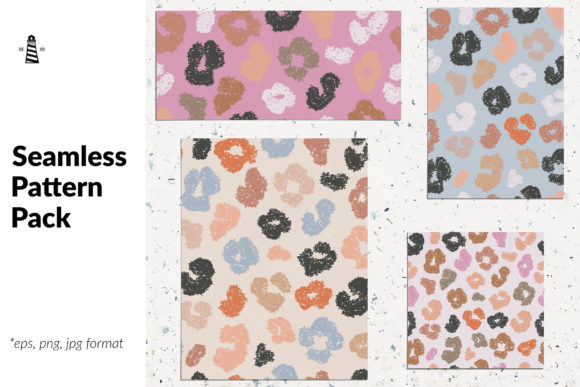
Black giraffe skin animal print patterns are high-resolution digital paper backgrounds that replicate the distinctive, organic texture and spotting of giraffe hide—rendered in rich black, charcoal, and deep gray tones against neutral or contrasting bases. Unlike photographic images of actual animals, these patterns are stylized, repeatable, and optimized for design use: they maintain visual consistency across large surfaces while preserving the natural irregularity that makes giraffe prints visually compelling.
These patterns belong to a broader category of animal print digital papers—widely used in graphic design, craft production, and print-on-demand workflows. The “black” variant distinguishes itself through its tonal range and versatility: it avoids the high-contrast boldness of black-and-white zebra prints while offering more visual weight and sophistication than lighter brown-based giraffe patterns.
Why Consider Black Giraffe Skin Animal Print Patterns?
Designers and crafters often seek animal prints not for literal representation, but for their ability to convey texture, movement, and organic rhythm. Black giraffe skin patterns serve this purpose with particular effectiveness because:
- Neutral yet expressive tone: The black-dominant palette integrates easily into modern, minimalist, or moody design schemes without clashing.
- Scale flexibility: The irregular spot distribution allows seamless scaling—smaller repeats work on business cards; larger iterations suit wall decals or fabric mockups.
- Non-literal interpretation: These are not photographs of animals, but abstracted, repeatable textures—making them appropriate for contexts where realistic wildlife imagery may be culturally or contextually inappropriate.
Practical Benefits and Realistic Expectations
The set described—16 giraffe skin animal prints digital papers—offers variety in background tone, spot density, contrast level, and subtle grain overlay. This diversity supports iterative design work: users can test how a pattern behaves over different base colors, under varying lighting conditions (e.g., screen vs. printed output), or alongside specific typography or iconography.
Each file is typically delivered as a high-resolution JPEG or PNG (300 DPI, A4 or letter size), with seamless tiling enabled. That means users can extend the pattern infinitely in design software without visible seams—a critical feature for packaging, wrapping paper, or web backgrounds.
However, expectations should align with the medium. These are digital papers, not vector illustrations or editable layered files. They do not support color replacement via swatches or non-destructive recoloring without raster editing. Users needing precise control over individual spots or adaptive color schemes may need complementary tools—or alternative assets.
When This Set Is a Strong Fit
This collection is especially well-suited for projects where:
- Consistency across multiple deliverables matters: For example, coordinating birthday invitations, party banners, cupcake toppers, and thank-you cards—all benefit from shared textural language.
- Time efficiency is prioritized: Designers working under deadline can apply ready-made, print-ready backgrounds instead of building custom textures from scratch.
- Print fidelity is required: The 300 DPI resolution supports sharp output on home printers, professional offset runs, or sublimation transfers—provided color profiles and bleed settings are correctly applied.
- Tactile suggestion enhances perception: In scrapbooking or handmade stationery, a black giraffe pattern implies luxury, depth, and natural variation—qualities difficult to achieve with solid colors alone.
When Alternatives May Be Worth Evaluating
Not every project benefits equally from black giraffe skin animal print patterns. Consider alternatives if:
- You require full color customization: Vector-based animal print patterns (e.g., SVG or AI files) allow hue, saturation, and lightness adjustments without quality loss. Raster-based digital papers limit such edits to pixel-level manipulation.
- Your audience includes young children or sensitive demographics: While stylized, some viewers may still associate animal prints with wildlife exploitation. Ethically conscious brands sometimes opt for invented organic textures (e.g., “stone grain” or “marbled clay”) that evoke similar tactility without biological reference.
- You’re designing for accessibility: High-contrast animal prints can reduce legibility when overlaid with text. If typography must remain highly readable without masks or drop shadows, simpler, lower-contrast backgrounds—or solid colors with subtle noise overlays—may perform better.
- You need animation or interactive behavior: Static digital papers cannot adapt to hover states, scroll effects, or responsive resizing the way CSS-generated patterns or SVGs can. Web-first projects may benefit more from code-based texture generation.
Making an Informed Decision
To determine whether black giraffe skin animal print patterns align with your goals, ask three questions:
- What is the primary output medium? If most work is printed—invitations, stickers, fabric labels—this set delivers reliable, predictable results. If outputs are predominantly digital (websites, apps, social media templates), evaluate how the patterns render at varied screen densities and whether transparency or layering capabilities are needed.
- How much design iteration do you anticipate? A set of 16 variations provides breadth, but not infinite options. If your workflow involves frequent client revisions or A/B testing of micro-variations (e.g., spot spacing ±5%), consider whether the included range covers likely needs—or whether supplemental assets will be necessary.
- What’s your technical comfort level? Applying digital papers requires basic familiarity with layers, blending modes, and export settings in tools like Adobe Photoshop, Affinity Designer, or Canva. Users unfamiliar with masking, clipping paths, or CMYK conversion may need to invest time learning those fundamentals before achieving intended results.
It’s also useful to preview sample files—if available—before purchase. Check for visible tiling artifacts, inconsistent contrast between files, or oversaturated blacks that may clog fine details during printing. Reputable sellers often provide thumbnails showing both full-sheet views and close-ups of spot structure and edge blending.
Final Considerations
Black giraffe skin animal print patterns occupy a practical middle ground: more distinctive than solids, more versatile than photorealistic images, and more accessible than custom-built textures. Their value lies not in novelty, but in reliability—offering designers a consistent, printable, and aesthetically grounded option when organic texture is part of the visual strategy.
They are not a universal solution, nor are they meant to replace thoughtful design judgment. Rather, they serve as one tool among many—effective when matched deliberately to project constraints, audience expectations, and technical requirements. As with any digital asset, success depends less on the pattern itself and more on how intentionally it is selected, adapted, and applied.