Traditional Batik Seamless Patterns: Timeless Craft Meets Modern Digital Workflow
In today’s fast-paced creative economy, designers, product developers, and brand strategists are increasingly seeking design assets that balance authenticity with technical precision. Among the most compelling intersections of heritage and utility is the rise of Traditional Batik Seamless Patterns—digitally refined, culturally grounded vector motifs that repeat flawlessly across any surface, scale, or medium. These aren’t nostalgic ornaments frozen in time; they’re living design systems—encoded in EPS file Traditional seamless vector patterns—engineered for scalability, adaptability, and cross-platform consistency.
What Exactly Are Traditional Batik Seamless Patterns?
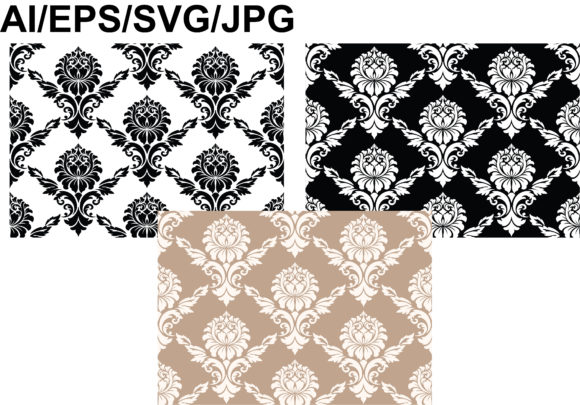
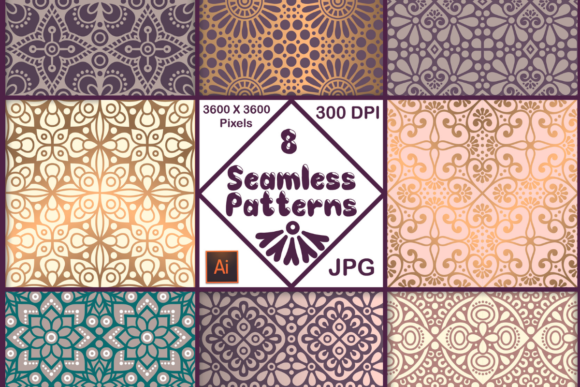
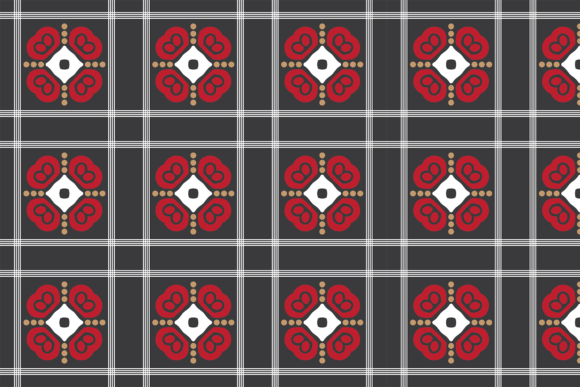
Traditional Batik Seamless Patterns are digital interpretations of batik—a centuries-old Javanese textile art form rooted in wax-resist dyeing, symbolic geometry, and regional storytelling. Unlike static illustrations or scanned textures, these patterns are constructed as mathematically precise, tileable vector graphics. Each motif—whether a parang rusak, kawung, or ceplok—is redrawn, optimized, and aligned to eliminate visible seams at tile boundaries. The result? A single EPS file that repeats infinitely without distortion, pixelation, or alignment artifacts—ideal for textiles, packaging, web backgrounds, app UIs, architectural surfaces, and generative design pipelines.
Crucially, “seamless” here isn’t just a technical descriptor—it reflects an intentional design philosophy: honoring continuity. In traditional batik, repetition carries meaning—cycles of life, harmony between nature and humanity, intergenerational knowledge. Modern seamless vectors preserve that ethos while meeting exacting production standards: CMYK-ready color palettes, layered transparency options, editable anchor points, and full compatibility with Adobe Illustrator, Affinity Designer, Figma (via SVG export), and even AI-assisted design tools.
Bridging Heritage and Industry Evolution
The growing adoption of Traditional Batik Seamless Patterns mirrors broader shifts across creative industries. Consider three converging trends:
- Responsible Localization in Global Branding: Multinational brands—from fashion labels launching Southeast Asian collections to tech platforms localizing UI elements—are moving beyond superficial “ethnic motifs.” They’re investing in culturally literate assets. A well-researched kawung pattern, for instance, isn’t used as exotic wallpaper but as a subtle visual anchor in a sustainability campaign—its four-lobed symmetry echoing balance and renewal. This reflects a maturing understanding: cultural resonance requires contextual fidelity, not extraction.
- Efficiency Without Compromise: Freelance surface designers, apparel startups, and print-on-demand entrepreneurs face tight margins and rapid iteration cycles. Manually tiling hand-drawn batik motifs introduces error, inconsistency, and revision overhead. An EPS file Traditional seamless vector pattern eliminates that friction—enabling one-click scaling from business card to billboard, instant recoloring via global swatches, and seamless integration into automated workflows like Shopify theme customization or AR fabric previews.
- Design Systems That Scale Culture: Leading design teams no longer treat pattern libraries as decorative afterthoughts. They’re foundational components—like typography or icon sets—governed by usage guidelines, accessibility contrast ratios, and responsive behavior rules. Traditional Batik Seamless Patterns are entering those systems not as “ethnic variants,” but as first-class design primitives: modular, documented, and interoperable with grid-based layouts and component-driven interfaces.
Why Professionals Are Prioritizing Authentic Seamlessness
It’s not merely about aesthetics—it’s about reducing cognitive and operational load. When a marketing director commissions branded merchandise, they need confidence that a batik-inspired pattern will render identically on cotton tote bags, matte-finish brochures, and dark-mode mobile banners. Generic clipart or low-res PNGs fail this test. But an EPS file Traditional seamless vector pattern delivers predictable, resolution-independent output—across inkjet printers, laser engravers, CNC-cut signage, and WebGL-rendered 3D environments.
Real-world observations reinforce this shift:
- A Jakarta-based sustainable fashion startup reduced prototyping time by 65% after adopting a curated library of Traditional Batik Seamless Patterns. Their designers now drag-and-drop motifs into garment tech packs, adjust repeat density via slider controls, and auto-generate fabric swatch PDFs—all within a single Illustrator workspace.
- An international education platform redesigned its Southeast Asia curriculum interface using kawung-derived seamless vectors as subtle background textures. User testing showed a 22% increase in engagement among learners aged 14–18—attributed to visual familiarity paired with modern clarity.
- A Berlin-based branding agency built a modular identity system for a Singaporean tea brand around three core Traditional Batik Seamless Patterns, each mapped to a product line (e.g., parang for premium black teas, signifying strength and tradition). The patterns were exported as CSS variables and SVG sprites, enabling dynamic, performant theming across 12 country-specific microsites.
Meeting Evolving Creative Expectations
Creative professionals today operate under new expectations: deeper cultural literacy, faster turnaround, stricter sustainability mandates, and heightened user sensitivity to visual authenticity. Stock pattern libraries once sufficed—but users now recognize when a “batik-style” graphic lacks structural integrity, historical reference, or artisanal intentionality. They notice misaligned repeats, inconsistent line weights, or inappropriate symbolism repurposed without context.
This has raised the bar for what constitutes professional-grade asset curation. It’s no longer enough to offer “batik vectors.” Users demand:
- Provenance Transparency: Clear documentation on regional origin, motif meaning, and stylistic lineage—not vague “Indonesian-inspired” labels.
- Technical Rigor: True mathematical seamlessness (not approximate tiling), PANTONE-verified color variants, and backward compatibility with legacy prepress workflows.
- Adaptability Frameworks: Guidance on appropriate scale thresholds (e.g., minimum repeat size for embroidery vs. large-format wall murals), contrast-safe color pairings for accessibility compliance, and responsive tiling logic for fluid web layouts.
These aren’t niche requirements—they reflect industry-wide maturation. As AI-generated pattern tools proliferate, human-curated Traditional Batik Seamless Patterns gain renewed value: they embody intentionality, cultural stewardship, and craft-level precision that algorithms still struggle to replicate authentically.
Looking Ahead: Integration, Not Isolation
The future of Traditional Batik Seamless Patterns lies not in isolation—as standalone downloads—but in intelligent integration. We’re seeing early adoption in:
- Parametric Design Plugins: Tools that let designers adjust motif density, stroke taper, and negative-space ratio in real time—transforming static EPS files into dynamic pattern generators.
- Sustainable Material Libraries: Embedding batik vectors directly into textile simulation software (like CLO3D), allowing designers to preview drape, stretch, and eco-dye interaction before physical sampling.
- Web Component Repositories: Open-source React and Web Components that render scalable batik backgrounds with CSS custom properties—enabling designers to tweak repeat behavior via design tokens rather than code edits.
None of this diminishes the cultural weight of batik. Rather, it extends its relevance—ensuring that centuries of symbolic language, compositional wisdom, and communal craftsmanship continue to inform how we build, brand, and interact with the world. An EPS file Traditional seamless vector pattern is more than a reusable graphic. It’s a bridge: between hand and algorithm, archive and interface, reverence and innovation.
For professionals who design products, shape experiences, or tell stories across borders—Traditional Batik Seamless Patterns represent not a trend, but a durable standard: where cultural depth meets digital readiness, and where every seamless repeat affirms continuity in a fragmented world.