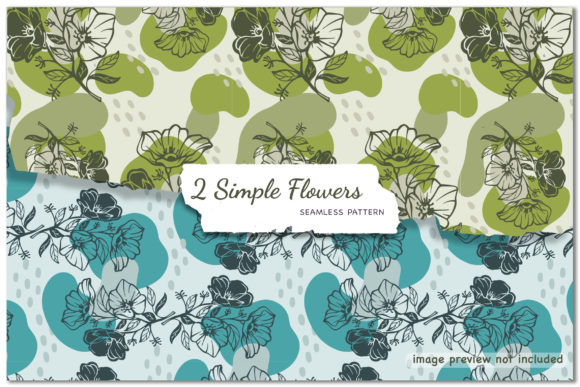
Simple Flowers - Seamless Patterns
Seamless patterns built from simple floral motifs are no longer just decorative extras—they’re strategic design assets. Whether you're developing a brand identity, designing packaging for an eco-conscious skincare line, or building a cohesive social media feed for a small business, Simple Flowers - Seamless Patterns offers a lightweight, versatile foundation that aligns with how professionals actually work today.
What This Collection Actually Delivers—And Why It Matters
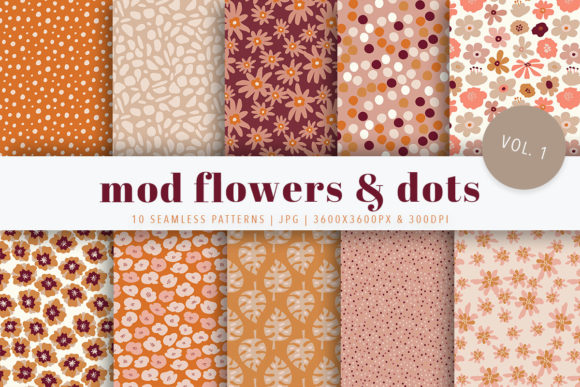
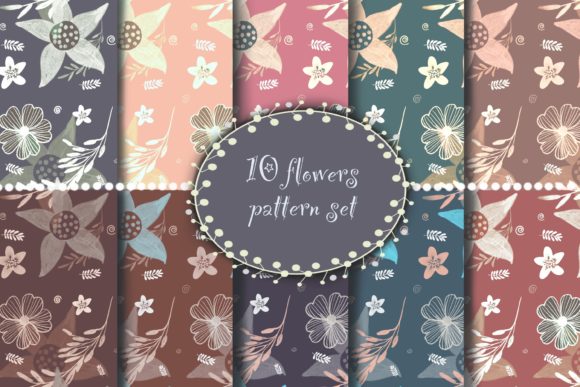
This isn’t a sprawling library of ornate bouquets or hyper-realistic botanicals. Instead, it’s a focused set of two clean, scalable seamless patterns rooted in minimal floral forms—think delicate stems, subtle buds, and balanced negative space. Each pattern comes in four formats: EPS (for vector editing in Adobe Illustrator CC), AI (native Illustrator files with editable layers and swatches), high-resolution JPEG, and transparent-background PNG. That format range reflects real-world usage—not theoretical idealism.
The inclusion of both EPS and AI files means designers can adapt the patterns without losing fidelity: recolor entire motifs in seconds, isolate individual elements for custom layouts, or scale infinitely for large-format prints like wall decals or fabric yardage. JPEG and PNG versions support quick integration into presentations, web mockups, or digital ads—no software required. The absence of image previews in the package signals intentionality: this is a toolset, not a visual showcase.
How Simplicity Fits Modern Creative Workflows
Today’s creators juggle multiple roles—designer, marketer, content strategist, client communicator—all within tight timelines. Overly complex assets slow things down. A pattern with 37 overlapping layers, dozens of named swatches, or embedded raster effects may look impressive in a portfolio, but it rarely survives first contact with a real deadline.
Simple Flowers - Seamless Patterns responds to that reality. Its restrained aesthetic avoids visual competition with text or photography. Its construction minimizes file bloat and rendering lag—critical when working across devices or collaborating remotely. And because the motifs are intentionally uncluttered, they adapt across mediums without needing heavy reworking: a light pink version reads well on a matte paper label; a monochrome variant holds up in grayscale email headers; a scaled-down tile works as a subtle background in a Notion dashboard or LMS interface.
Consider a freelance educator creating printable worksheets for elementary science units. They need visual warmth without distraction. A busy floral pattern could interfere with readability or trigger sensory overload for some learners. But one of these simple flower patterns—used at 10% opacity behind soft pastel headings—adds quiet cohesion without compromising function.
Beyond Aesthetics: Practical Integration Across Roles
Business owners launching a new product line often underestimate how much time gets lost sourcing, licensing, and adapting visuals. Royalty-free assets with clear usage rights help—but only if they’re truly usable. These patterns carry standard commercial licenses, meaning they can be applied to merchandise, digital products, marketing collateral, and client work without additional negotiation. More importantly, their simplicity reduces legal friction: no recognizable trademarked blooms, no culturally specific iconography, no ambiguous stylization that might require localization review.
For marketers building seasonal campaigns, consistency matters more than novelty. Reusing a single floral motif across email banners, Instagram Stories templates, and printed postcards builds subconscious recognition—especially when paired with consistent typography and color palettes. With Simple Flowers - Seamless Patterns, that repetition feels intentional, not repetitive. You’re not recycling graphics; you’re reinforcing visual language.
Freelancers pitching to boutique studios or creative agencies also benefit. Including a custom-patterned proposal cover or branded slide deck signals attention to detail without over-engineering. It shows you understand how design supports strategy—not just decoration.
Evolving Expectations Around Digital Assets
A decade ago, “seamless pattern” often meant downloading a 1200×1200 pixel JPEG and hoping it tiled cleanly. Today’s users expect precision: true vector scalability, predictable tiling behavior, and compatibility with modern tools like Figma (via SVG conversion) or Canva (via PNG upload). The inclusion of AI and EPS files here meets that expectation directly—no workarounds, no third-party converters, no guesswork about bleed or alignment.
There’s also growing awareness around sustainable design practices—not just environmental sustainability, but *cognitive* and *operational* sustainability. Heavy, over-processed assets consume memory, slow collaboration, and increase revision cycles. Lighter, modular resources like these reduce friction across teams. A developer integrating a pattern into a Shopify theme doesn’t need to optimize a 10MB PSD—they drop in a 200KB PNG and move on.
Real Use Cases, Not Hypotheticals
- An indie stationery brand uses the lighter pattern as a background texture under foil-stamped letterpress cards—visible only in shadowed areas, adding depth without competing with hand-lettered copy.
- A wellness coach applies the darker variant (in muted sage green) to Canva-designed habit trackers, then exports as PDFs for clients—ensuring crisp printing at home or in-office.
- A university communications team adapts the AI file to create a custom PowerPoint template for faculty presentations, embedding the pattern subtly in slide footers while maintaining ADA-compliant contrast ratios.
- A product photographer places a seamless floral backdrop (printed from the high-res JPEG) behind flat-lay shots of ceramic mugs—avoiding the cost and storage demands of physical fabric backdrops.
Why “Simple” Isn’t Synonymous with “Limited”
Critically, simplicity here doesn’t mean rigidity. Because the patterns are built from editable vectors, users can modify stroke weights, adjust spacing between repeats, or even extract individual flowers to use as standalone icons. One designer recently converted a single bloom from the AI file into a custom cursor for her client’s SaaS platform—keeping interface cohesion without needing external icon libraries.
This flexibility supports iterative design. You don’t need to choose “the perfect pattern” upfront. You can start with one variation, test it across three contexts (e.g., mobile app UI, print brochure, social ad), then tweak hue, scale, or opacity using the native files—no re-licensing, no vendor dependency.
Looking Ahead—Without Overpromising
Patterns won’t replace thoughtful branding. They won’t fix inconsistent messaging or poor user experience. What they *can* do is serve as reliable, low-friction connective tissue across touchpoints—especially when time, budget, or technical bandwidth is constrained.
As AI-assisted design tools mature, the value of human-curated, intentionally restrained assets grows—not shrinks. Algorithms generate endless variations, but they don’t inherently understand context, restraint, or appropriateness. A well-chosen simple floral pattern does. It carries quiet intention. It respects the viewer’s attention. And it gives creators room to focus on what matters most: clarity, connection, and purpose.
If your workflow involves frequent visual updates—whether for client deliverables, internal documentation, or personal projects—Simple Flowers - Seamless Patterns offers a pragmatic starting point. Not flash, not filler—just functional beauty, ready when you are.